
Home / The Complete Guide to Pure Fenbendazole
The Complete Guide to Pure Fenbendazole
A plain-English guide to what the compound is, how purity is tested, what the formats mean and how to judge a supplier.

Educational only. Fenbendazole is a veterinary medicine. It is not approved by the FDA for human use, and this guide is not medical advice. Our store links are affiliate links.
What fenbendazole is
Fenbendazole is a benzimidazole anthelmintic, which is a drug that kills parasitic worms. It has been used in veterinary medicine since the 1970s, mostly for roundworms, hookworms, whipworms, tapeworms and Giardia in dogs, cats, horses and livestock. Its chemical formula is C15H13N3O2S, its CAS number is 43210-67-9, and its molecular weight is about 299 g/mol.
It works by binding to a protein called beta-tubulin in the parasite. That stops the cell from building microtubules, the internal scaffolding it needs to take in nutrients, and the worm starves. Mammalian tubulin is different enough that the drug is well tolerated by the animals it is approved for.
The compound sold by research suppliers is the same active ingredient as in veterinary products. "Pure fenbendazole" just means the ingredient on its own, without the flavoring and carriers that go into pet dewormers.
A close relative: mebendazole works in a similar way. Mebendazole is approved for some human parasite infections. Fenbendazole is not approved for people anywhere that we know of.
Why people are talking about it
Around 2019, fenbendazole started to get attention outside veterinary circles. Part of that came from laboratory papers asking whether benzimidazole drugs affect fast-dividing mammalian cells, and part came from personal stories shared online. We are not going to summarize those stories here, and you should be careful with them. A personal account is not a clinical trial, and it cannot tell you whether a drug caused anything.
What is fair to say is that most of the published work is early-stage laboratory work, in cells or in animals. It does not show that fenbendazole treats any human condition. If you or someone you know is dealing with a serious illness, the right place to start is a doctor, not a supplier's website.
What "pure" should mean
Purity is the share of a product that is actually fenbendazole. The rest is related compounds left over from manufacturing, leftover solvents, or other contamination. Suppliers who quote a figure usually say 99% or higher, and that figure only means something if it comes from a named test on a specific batch.
The wording to watch for is vague: "pharmaceutical grade", "lab tested", "premium purity". Those phrases cost nothing to print. A number, a method and a lab name are harder to fake, and they are what you want to see.
Good capsules also list what else is in them. Most legitimate products use a plant-based capsule shell and say whether there are any fillers or binders.
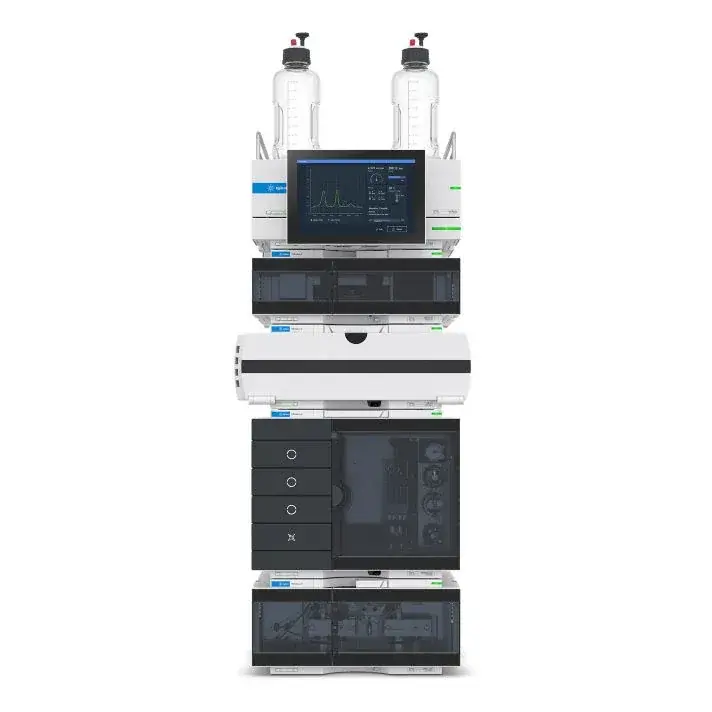
HPLC, FT-IR and GC-MS
These are the three tests you will see supplier pages mention. They answer different questions, so one is not a substitute for another.
| Test | Answers | Used by |
|---|---|---|
| HPLC (high-performance liquid chromatography) | How much of the sample is fenbendazole. This produces the purity percentage. | FenbenLab, Sanare Lab |
| FT-IR (infrared spectroscopy) | Whether the compound is what it says it is, by matching its infrared fingerprint. | FenbenLab |
| GC-MS (gas chromatography with mass spectrometry) | Identity and trace impurities, including residual solvents. | Sanare Lab |
A Certificate of Analysis (CoA) is the report that comes out of these tests. A useful one names the lab, lists the batch or lot number, states the method and gives the result. Check that the batch number on the certificate matches the one on your bottle. A generic certificate with no batch number tells you very little.
Capsules, powder and strengths
Capsules come pre-measured. They cost more per milligram, but there is nothing to weigh, which is why most buyers choose them. Powder is cheaper per milligram and more flexible, but it needs a scale that reads to the milligram, and measuring errors are easy to make.
The strength is simply the amount in each capsule. The common sizes are 222 mg and 444 mg, and FenbenLab also sells a 500 mg capsule that no other supplier we compare offers. When you compare products, work out the price per 222 mg as we do on the suppliers page, because bottle counts vary so much.
Safety and what is not known
In animals, fenbendazole has a long record of tolerability at the doses vets use. That record does not carry over automatically to people. There is no approved human dose, and we are not aware of a published human safety study that would support one. Anything you read online about amounts should be treated as unverified.
Two practical points are worth knowing. First, products sold for research are not made under the same rules as approved medicines, so what is on the label matters and what is inside matters even more, which is why testing documents are worth reading. Second, if you are taking any medication or have a medical condition, talk to your doctor before taking any new compound.
How to judge a supplier
- Ask for the CoA before you pay. Check the batch number and the method.
- Look for named testing. A lab or a method, not just an adjective.
- See what else they test for. Heavy metals and microbes matter as much as purity.
- Check the company. A real address, working contact details, and reviews on a site the seller doesn't run.
- Be wary of health claims. A seller promising that a product treats or cures anything is breaking the rules, and you should walk away.
We apply the same checks in our reviews of FenbenLab, BP Life and Sanare Lab.
Where to buy
If you have checked the paperwork and are ready to order, these are the three stores we compare. Our comparison page shows how they differ.
Use code FENBENDAZOLEVER at checkout for 10% off BP Life orders.
Shop BP Life and save 10%Glossary
- Anthelmintic
- A drug that kills or expels parasitic worms.
- Batch (lot) number
- An identifier for one production run. Tests apply to a batch, not to a brand.
- CoA
- Certificate of Analysis. A lab report for a specific batch.
- GMP
- Good Manufacturing Practice. A set of rules for how a facility makes and records its products.
- HPLC
- A test that measures how much of a sample is the target compound.
- HPMC
- A plant-based material used for capsule shells.
- Microtubule
- A tube-shaped protein structure that cells use for shape, transport and division.