
Home / How to Read a Fenbendazole Certificate of Analysis
How to Read a Fenbendazole Certificate of Analysis
A Certificate of Analysis is only useful if you know what to look for. Here is a checklist, the red flags, and a real example.
Educational only. Fenbendazole is a veterinary medicine and is not approved by the FDA for human use. This page explains how to read laboratory paperwork. It is not medical advice.
What a Certificate of Analysis is
A Certificate of Analysis, or CoA, is a report from a laboratory that lists what it found when it tested one specific batch of a product. For fenbendazole it usually tells you the purity, and sometimes the identity of the compound and whether contaminants were found.
A CoA does not prove a product is good. It is a document, and documents can be wrong, out of date or copied. What it does is give you something specific to check, which is far more than a claim like "lab tested" on a sales page.
What a good CoA shows
| Field | Why it matters |
|---|---|
| Lab name and contact | You should be able to contact the lab that issued it. A certificate with no named lab can't be checked. |
| Batch or lot number | It ties the result to a production run. It should match the number on the bottle you receive. |
| Test method | HPLC for purity is the common one. A result with no method is hard to interpret. |
| Result and units | A purity percentage or a mg per g figure, not just the word "pass". |
| Test date | An old date or a missing date means the result may not describe today's product. |
| Who signed it | A lab signature or accreditation, such as ISO/IEC 17025, is stronger than a seller's own stamp. |
Reading the purity number
Purity is the share of the sample that is fenbendazole. The rest is related compounds from manufacturing, leftover solvents or other material. A result of 99% means about one percent is something else.
Here is a real example of how a result is worded. One supplier we have covered published a sample line that reads "Fenbendazole sample: 980.490 mg/g (98.049%). Tested March 18, 2025, HPLC." Read it in three steps. The unit is mg per gram, so 980.490 mg in each gram of sample is 98.049%. The method is HPLC. And the note says the result applies to the reported sample, not necessarily to every batch.
That is a useful lesson. A seller may advertise "99%" in large type while its own published sample reads a little lower. Neither number is wrong, but only the certificate for your batch tells you what you actually received.
HPLC, FT-IR and GC-MS
| Test | Answers |
|---|---|
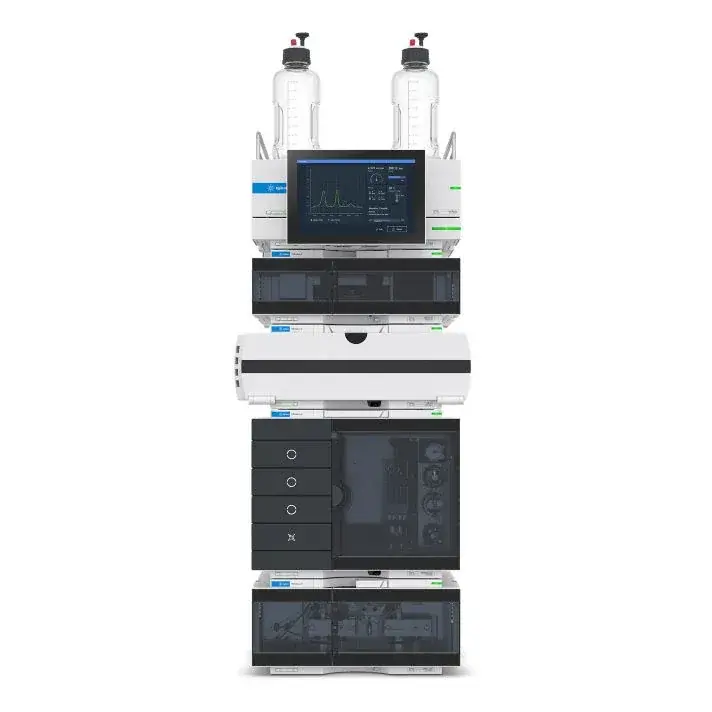
| HPLC (high-performance liquid chromatography) | How much of the sample is fenbendazole. This produces the purity percentage. |
| FT-IR (infrared spectroscopy) | Whether the compound matches the expected infrared fingerprint, which supports its identity. |
| GC-MS (gas chromatography with mass spectrometry) | Identity and trace impurities, including leftover solvents. |
| Heavy metals screening | Whether metals such as lead or arsenic are present above a limit. A separate test from purity. |
One test is not a substitute for another. A product can be 99% pure by HPLC and still say nothing about heavy metals. The more of these a supplier documents, the more you can check. Our complete guide explains each method in more detail.
Red flags
- No lab name, or a lab you can't find online.
- No batch number, or one that does not match your bottle.
- A certificate hosted as an anonymous file with no supplier or lab page behind it.
- A result with no method, no units or no date.
- Round, perfect numbers on every product and every batch.
- A seller who will only send a certificate after payment, or not at all.
- Health claims in the paperwork. A lab report reports measurements, not benefits.
How to check one
- Ask the supplier for the certificate for your batch, before you buy if you can.
- Check that the lot number matches the one printed on your bottle when it arrives.
- Look up the lab. A real lab has a website and a phone number or email.
- If something looks off, email the lab, give the lot number and ask whether it issued the report.
- Compare the purity figure with the supplier's claim. If they differ, ask why.
We apply the same checklist when we compare suppliers. See each supplier's published results in the reviews of FenbenLab, BP Life and Bendazole Lab, and the scoring in how we rate suppliers.
Questions about CoAs
Does a Certificate of Analysis mean a product is safe?
No. It reports what a lab measured in one sample. It says nothing about whether a product is safe or suitable for anyone. Fenbendazole is not approved for human use, so ask a doctor about any health question.
What is a good purity percentage for fenbendazole?
Suppliers usually quote 98% to 99.9%. What matters more than the number is that it comes from a named method, a named lab and your batch.
Is a seller's own in-house test enough?
It is better than nothing, but independent testing is stronger because the lab has no stake in the result. Some suppliers do both, with in-house tests on every batch and independent tests now and then.
What if the lot number on my bottle does not match the CoA?
Contact the supplier and ask for the certificate for your lot. If they can't provide one, treat that as a warning sign.
Can a CoA be fake?
Yes. That is why it is worth checking the lab name, the lot number and the date, and contacting the lab if anything looks wrong.